Author: Melissa

  • CASUAL JOB VACANCY for x2 Receptionists Chiropractic Assistants

    JOB VACANCIES x2 CASUAL  

    Redcliffe Family Chiropractor

    Monday 27th  August 2018

    Valid to September 2018

    For 1 or 2 adult plus a school based junior 2 after school sessions a week.

    2 of our staff are leaving this year for different careers

    Are you are available for a fantastic casual job with regular work with flexibility? We may have the perfect position for you

    We are looking for a fast paced, self-motivated, confident receptionist and chiropractic assistant to work in a busy clinic to assist patients and our Chiropractor and therapies. Pay scale is per 2010 Health Services Act for Chiropractic Staff.

    You need to show initiative, be a great verbal and written communicator.

    If you are interested, and these qualities are yours, come in when we are open to introduce yourself

    Hours are several hours per shift: starts are:-

    Mon Wed Fri morning start at 7:30 am, afternoon start at 3 pm

    Tues afternoon 3pm

    Finishes are around 6 to 7 pm

    1. please bring in your resume and
    2. also a one page hand written letter selling yourself and why you would be a great addition to our team.

    Please include a contact phone number and times available for an over the phone interview.

    Redcliffe Family Chiropractor

    Part of the Redcliffe Wellness Team

  • JUNIOR JOB VACANCIES

    JUNIOR JOB VACANCIES Redcliffe Family Chiropractor

    Are you are in school and looking for a fantastic junior casual job for after school hours and during holidays? We may have the perfect position for you

    We are looking for two fast paced, self-motivated, confident receptionists and chiropractic assistants to job share in a busy clinic to assist patients and our Chiropractor Dr Steve twice a week after school. You need to show initiative, be a great verbal and written communicator.

    If you are interested, and these qualities are yours, please bring in your resume and also a one page hand written letter selling yourself. Please include a contact phone number and times available for an over the phone interview.

    Redcliffe Family Chiropractor

  • what happens when someone uses our internet & registered business name… are we in the wrong?

    This is in regard to a Chiropractic party as a new business in Margate advertising ‘as us’ for 5 months until we challenged. This is there response:-

    And their response to being named they are not happy at that. Upon request of Sung Do Lawyers 20th March 2018 representing the party who used our name:- …“we have been instructed to report you to the relevant regulatory bodies if you do not remove the article immediately”, of the party who used our registered business name ‘Redcliffe Family Chiropractor’, states their client used it unintentionally to build his business, and is an innocent mistake,

    however the Lawyers client will not be providing me with an apology letter, on behalf of their client Sung Do Lawyers state, “our client has sincerely apologized for their mistake and strongly asserts that they did not intend to cause any harm to your business“.

    And as such, we shall refrain.

  • AMA validates Chiropractic as treatment for back pains

    Following our flyer

    Redcliffe Wellness
    19 years of helping people
    with their Stiffness Aches & Pains

    AMA Validates Chiropractic?
    By Donald M. Petersen Jr., BS, HCD(hc), FICC(h), Publisher Dynamic Chiropractic 11/07/17
    Under the heading of, “I never thought I’d see the day when…” comes a study recently published in the Journal of the American Medical Association (JAMA).1 The goal of the study was to “systematically review studies of the effectiveness and harms of SMT (spinal manipulative therapy) for acute (6 weeks) low back pain.” Paige, et al., identified 26 randomized clinical trials (RCTs) to measure improvements in pain and function, and assess any harm.
    Important Findings
    Fifteen RCTs comprising a total of 1,711 patients “provided moderate-quality evidence that SMT has a statistically significant association with improvements in pain.”
    Twelve RCTs comprising 1,381 patients “produced moderate-quality evidence that SMT has a statistically significant association with improvements in function.”
    “No RCT reported any serious adverse event.”
    The authors concluded that SMT provides “modest improvements” in both pain and function for up to six weeks. While this might seem like faint praise, the most recent studies on drug alternatives to chiropractic care have demonstrated the following:
    “Paracetamol [acetaminophen] is ineffective in the treatment of low back pain and provides minimal short term benefit for people with osteoarthritis. These results support the reconsideration of recommendations to use paracetamol for patients with low back pain and osteoarthritis of the hip or knee in clinical practice guidelines.”2
    “[C]ompared with placebo, NSAIDs do not provide a clinically important effect on spinal pain, and six patients must be treated with NSAIDs for one patient to achieve a clinically important benefit in the short-term.”3
    “[W]hen this result is taken together with those from recent reviews on paracetamol [acetaminophen/Tylenol] and opioids, it is now clear that the three most widely used, and guideline-recommended medicines for spinal pain do not provide clinically important effects over placebo.”3
    An MD in Our Corner?
    Published in the same issue with the Paige, et al., study is an editorial by Richard A. Deyo, MD, MPH.4 Dr. Deyo has dedicated several decades to the study of spine care. The list of papers he has participated on is extensive. (His work has been referenced 92 times in Dynamic Chiropractic alone.) In his editorial, Dr. Deyo makes many important points including:
    Thirty percent of patients with back or neck pain seek chiropractic care.5
    Fifty-nine percent of consumers surveyed by Consumer Reports were highly satisfied with chiropractic care compared to 55 percent for PTs and 34 percent for primary MDs.6
    Serious complications for low-back SMT are very rare, while NSAIDs users commonly see renal and gastrointestinal adverse effects.7-8
    Looking at the cost of drugs, surgery and their complications, chiropractic back pain patients “did not incur higher overall treatment costs compared with those who received only conventional care.”5
    Progress at Last?
    All of the above reinforces our understanding that drugs (and certainly surgery) are not the answer. As established by the AHCPR in Acute Low Back Problems in Adults: Assessment and Treatment some 23 years ago, spinal manipulation (chiropractic,according to the definition used by the panel) “is safe and effective for patients in the first month of acute low back symptoms without radiculopathy.”9
    On Sept. 25 of this year, we will be celebrating the 30th anniversary of Judge Getzendanner’s decision that the AMA violated the Sherman Act in its attempt to restrain trade through a conspiracy “to contain and eliminate the chiropractic profession.”10 How fitting it is that the AMA’s primary journal has finally published a study, with an editorial, demonstrating the value of chiropractic after all these years.
    The AMA as an organization hasn’t really validated chiropractic, but its flagship journal has published two articles that will speak loudly to AMA members and the world about one of the benefits of chiropractic care.
    Author’s Note: The Paige, et al., study completes a circle that required decades of work by many. We have seen the tide change from an open effort to destroy chiropractic to publishing a study to demonstrate our value. This is hopefully just the beginning.

    References
    1. Paige NM, Miake-Lye IM, Booth MS, et al. Association of spinal manipulative therapy with clinical benefit and harm for acute low back pain: systematic review and meta-analysis. JAMA, 2017;317(14):1451-1460.
    2. Machado GC, et al. Efficacy and safety of paracetamol for spinal pain and osteoarthritis: systematic review and meta-analysis of randomized placebo controlled trials. BMJ, 2015;350:h1225.
    3. Machado GC, et al. Non-steroidal anti-inflammatory drugs for spinal pain: a systematic review and meta-analysis. Ann Rheum Disease; e-pub ahead of print, Feb. 2, 2017.
    4. Deyo RA. “The Role of Spinal Manipulation in the Treatment of Low Back Pain.” (Editorial) JAMA, 2017;317(14):1418-1419. (Please note that Dr. Deyo’s editorial is less than two pages long without references. You can read the entire first page free by clicking on the link in the article where I discuss Dr. Deyo.)
    5. Martin BI, Gerkovich MM, Deyo RA, et al. The association of complementary and alternative medicine use and health care expenditures for back and neck problems. Med Care, 2012;50(12):1029-1036.
    6. “Relief for Your Aching Back: What Worked for Our Readers.” Consumer Reports, 2013.
    7. Whelton A, Hamilton CW. Nonsteroidal anti-inflammatory drugs: effects on kidney function. J Clin Pharmacol, 1991;31(7):588-598.
    8. Vonkeman HE, van de Laar MAFJ. Nonsteroidal anti-inflammatory drugs: adverse effects and their prevention. Semin Arthritis Rheum, 2010;39(4):294-312.
    9. Bigos S, Bowyer O, Braen G, et al. Acute Low Back Problems in Adults. Clinical Practice Guideline No. 14. AHCPR Publication No. 95-0642. Rockville, MD: Agency for Health Care Policy and Research, Public Health Service, U.S. Department of Health and Human Services, December 1994.
    10. “U.S. Judge Finds Medical Group Conspired Against Chiropractors.” The New York Times, Aug. 29, 1987.

  • Chiropractic Care and Cervical Artery Dissection: No Evidence for Causation

    Published by  Spinal Research at  April 20, 2017

    We’ve all heard the scaremongers proclaim a link between chiropractic care and stroke. It’s easy to dismiss with a few well-referenced rebuttals and easier still to reject with a roll of the eye. Recently, a group of researchers took the issue of Cervical Artery Dissection, a key cause of strokes, and put it through the rigors of academia in a systematic review and meta-analysis.

    The result: they found no evidence for causation. Here are the details on a contentious issue.

    The authors of the study all hailed from the neurosurgery departments of either Penn State Hershey Medical Centre, Loma Linda University Medical Center or Pennsylvania State University. They undertook to examine the case reports and case control studies that suggested an association between chiropractic neck manipulation and cervical artery dissection by means of a systemic review and meta analysis [1].

    They used a GRADE rating to establish the quality of the evidence[2,3,4]. This starts by examining the study design, before looking sequentially at features with potential to enhance or diminish confidence. The eventual rating took into consideration potential for bias given the controversial nature of the topic and the legal ramifications of the study’s findings. This is where it gets interesting.

    The search took them through some 253 articles with just two eligible class II and four class III studies among the number. Though the meta-analysis seemed to reveal a small association between chiropractic care and dissection, the authors of the study deemed the evidence to be of ‘very low’ quality according to the GRADE rating.

    This lead the authors to reason that the relationship (between chiropractic care and CAD) may be explained by “the high risk of bias and confounding in the available studies, and in particular by the known association of neck pain with CAD [cervical artery dissection] and with chiropractic manipulation and CAD. Belief in a causal link may have significant negative consequences such as numerous episodes of litigation [1].”

    Once again, it appears that the truth may be getting in the way of a good story when it comes to so-called ‘risks’ tied up with chiropractic. The existing literature pointing to a correlation between spinal manipulative therapy and CAD is, according to the researchers, very low quality and potentially loaded with bias.

    “While this study controlled for possible confounders such as neck pain, there were several limitations. Head and neck pain as well as chiropractor visit were assessed in a retrospective fashion by mail survey, very possibly introducing both recall and survivor bias. The reason for reporting to the chiropractor (e.g., trauma) was not assessed. Further, there was significant variability among diagnostic procedures, which may reflect increased motivation by physicians to rule out dissection in patients with a history of SMT. Such motivation could result in interviewer bias,” they wrote [1].

    This isn’t just a study that failed to dig up any evidence. It’s a study that points to a potentially serious misconception. The authors wrote:

    “There is no convincing evidence to support a causal link, and unfounded belief in causation may have dire consequences [1].”

    So there you have it. Chiropractic care and cervical artery dissection, at this point in time, there is no evidence for causation.

    References

    [1] Church E, Sieg E, Zalatimo O, Hussain N, Glantz M, Harbaugh R (2016) “Chiropractic Care and Cervical Artery Dissection: No Evidence for Causation,” Penn State Neurosurgery Channel, http://www.cureus.com/articles/4155-systematic-review-and-meta-analysis-of-chiropractic-care-and-cervical-artery-dissection-no-evidence-for-causation retrieved 29 March 2017

    [2] Guyatt G, Oxman AD, Akl EA, et al.: GRADE guidelines: 1. Introduction-GRADE evidence profiles and summary of findings tables. J Clin Epidemiol. 2011, 64:383–394. 10.1016/j.jclinepi.2010.04.026

    [3] Guyatt GH, Oxman AD, Kunz R, et al.: GRADE guidelines: 2. Framing the question and deciding on important outcomes. J Clin Epidemiol. 2011, 64:395–400. 10.1016/j.jclinepi.2010.09.012

    [4] Balshem H, Helfand M, Schünemann HJ, et al.: GRADE guidelines: 3. Rating the quality of evidence. J Clin Epidemiol. 2011, 64:401–406. 10.1016/j.jclinepi.2010.07.015

  • The Way You Argue With Your Partner Affects Your Long Term Health

    If you’ve ever thought arguing is no good for you, you’re right.  A newly published study in the Journal Emotion1 shows how couples fight is linked with either cardio-vascular issues or back pain.  If you’re one to blow up in anger, you can look forward to heart issues later.  And if you’re more the silent treatment type, get ready for back pain issues.  It’s enough to drive a person to therapy!


    The researchers from the University of California, Berkeley and Northwestern University1 have been studying the same couples for over 20 years.  That’s a lot of arguments!


    Lead by Alice Levenson and Claudia Hasse, an assistant professor of human development and social policy at Norhtwestern University, the study tracked 156 middle aged as well as older, couples.

    “Conflict happens in every marriage, but people deal with it in different ways.  Some of us explode with anger; some of us shut down,” Haase said. “Our study shows that these different emotional behaviours can predict the development of different health problems in the long run.”

    The study controlled for external elements such as age, education, exercise, smoking, alcohol and caffeine consumption, all known to influence health and followed participants who are now in their 60’s, 70’s and 80’s.

    “We looked at marital-conflict conversations that lasted just 15 minutes and could predict the development of health problems over 20 years for husbands based on the emotional behaviours that they showed during these 15 minutes,” said Haase.

    The link between emotional wellbeing and health, much debated over the years, has been shown to have a long-term impact on certain types of emotional responses to arguments.  Those displaying anger that is by showing physical displays such as raised voices, knitted brows, lips pressed together and tight jaws had the most pronounced health relationship, linking specifically with cardio-vascular illness.  They were also found to be at a greater risk of developing chest pain and high blood pressure.

    Those who were silent, or engaged in emotional suppressive behaviour referred to be the researchers as ‘stonewalling’ in arguments, such as refusing to talk and avoiding eye contact, were more likely to develop backaches, stiff necks and general muscle tension.

    “Our findings suggest particular emotions expressed in a relationship predict vulnerability to particular health problems, and those emotions are anger and stonewalling,” Levenson said.

    These findings articulate what has been a longstanding theoretical concern over the association between interpersonal emotional behaviours and physical health.

    “For years, we’ve known that negative emotions are associated with negative health outcomes, but this study dug deeper to find that specific emotions are linked to specific health problems,” Levenson said. “This is one of the many ways that our emotions provide a window for glimpsing important qualities of our future lives.”

    Essentially what this new information brings to light is an ability to intervene and manage emotional responses in order to address major health issues.

    So the next time you feel like exploding in anger at your partner, or turning your back and not speaking to them for a week.  Have think about the ramifications to your heart and your back.  Sometimes words said in anger aren’t just words you can’t take back, they might just be hurting you more than they hurt someone else.


    References:

    [1] Haase, Claudia M.; Holley, Sarah; Bloch, Lian; Verstaen, Alice; Levenson, Robert W. Interpersonal Emotional Behaviors and Physical Health: A 20-Year Longitudinal Study of Long-Term Married Couples… Emotion, 2016
  • Spinal Disc Decompression Therapy

    Spinal Disc Decompression Therapy 

    Spinal Disc Decompression Therapy is available from 11 April 2016 at Redcliffe Wellness Centre, 17 Silvyn Street REDCLIFFE QLD

    This is the latest Cutting Edge Therapy that is

    • Non-Surgical
    • Non-Chiropractic
    • Pain-Free

    It suits people who would like to get up and be able to move pain-less in their low back and neck, despite having a severe problem, their is no manipulation, no need to stop care with your current health care providers.

    We accept patients for this procedure who have chronic or sub-acute conditions that would be inclusive of:

    • Herniated Discs
    • Chronic Back Pain
    • Leg Pain
    • Sciatica
    • Arm Pain
    • Neck Pain
    • Spinal Stenosis

    We prefer MRI/CT be brought in for an assessment and we prefer recent spinal x-rays or arrange to get them for a New Patient Assessment. You do not need referral from your Doctor, Chiropractor, Physiotherapist or Dentist.

    Feel free to call, email or make an appointment on (07) 3284-2065, [email protected]

  • What Does Your Central Nervous System Do?

    What Does Your Central Nervous System Do?

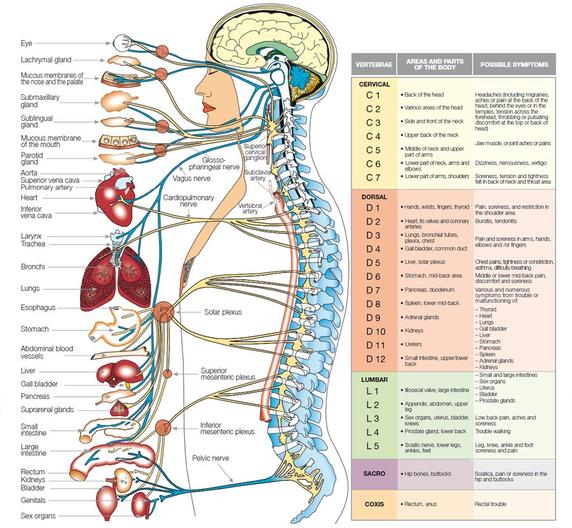
    Your central nervous system, or your CNS consists of two parts: the brain and the spinal cord. The brain is the center of our thoughts, the interpreter of our external environment, and the origin of control over body movement.central nervous system

    A healthy spine, coupled with a healthy nervous system, is crucial in terms of maintaining whole body health. Any alteration of spinal structure or function may cause irritation of the central nervous system or the outer spinal nerves that are protected as they travel to organs or muscles. This alteration is known to chiropractors as “pinched nerve”. Protection of the central nervous system allows it to function optimally via the spinal cord, housed within the spine, which controls the function of every single cell, tissue and organ in the body.

  • Knee Pain: going, going, gone

    Knee Pain: going, going, gone

    Knee Pain: going, going, gone!

    We may have the tools for successful knee pain removal without drugs or surgery

    At Dr Steve’s Redcliffe Wellness we may help get rid of knee pain.

    We have been doing knee pain manual therapies since 2013. At your first visit if you specify knee pain as the sole treatment you want, tell us and we will do the knee pain protocol tests and assessments. you will know if you will respond to our treatment program, because you will smile and walk out happier on that visit. If we can’t help we will part as acquaintances. If its part of other painful areas that changes our assessment and we do regional assessments and multiple visits to get a result.

    Some people like the guy above cannot get down on his knees, while the other one can’t get their knee up. If you have unhappy the drugs and surgery stuff or don’t want it, we will assess you, and if we can help we will tell you straight up, and you will know. It takes time though, if you have chronic pain and discomfort, reoccurring problems and weird things going on, we can ease it. This is not so successful for recent knee injury so do the RICE – Rest Ice Compression Elevation!

    If coming post knee op wait 6 weeks, two weeks general surgery wait. We cannot help gout or if your on cancer drugs

    Dr Steve’s Redcliffe Wellness Centre

    17 Silvyn Street REDCLIFFE 4020 QLD (07) 3284 2065

  • Plantar Fasciitis is a pain in the foot

    Plantar Fasciitis is a pain in the foot

    Plantar Fasciitis is a pain in the foot.

    And now we can help at ‘Dr Steve’s Redcliffe Wellness’.

    What we learn at University is changing. So we did the foot levelers course, the extremity lower leg course, went to Dallas, Texas for gait control course and then Zurich, Switzerland for re- modelling & nutrients, then Brain Injury Course for concussed people who develop the staggered gait reflex.

    Then we installed computer analysis foot machines and bought the best we could afford for Redcliffe people

    We don’t replace your doctor or podiatrist, what we work on is the points of foot pain.

    What is plantar fasciitis?

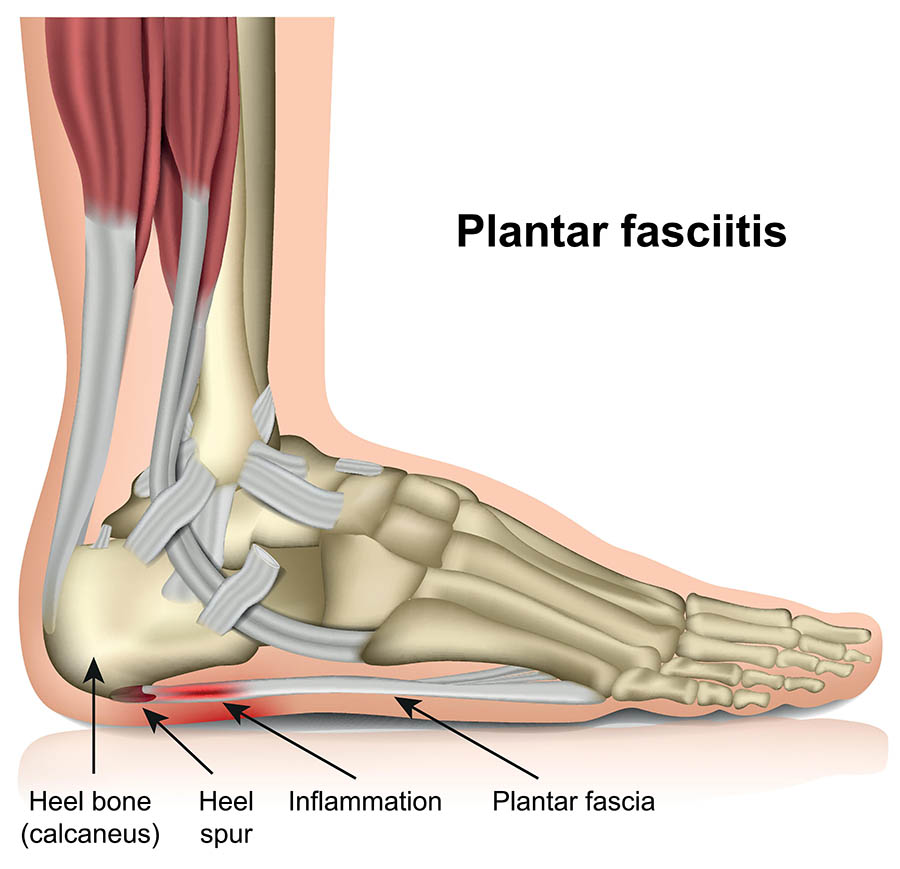
    https://www.healthdirect.gov.au/plantar-fasciitis: Plantar fasciitis is an inflammation of the plantar fascia, a piece of strong, thick tissue that runs along the bottom of the foot. It connects the heel bone to the toes, creating the arch of the foot. Also called Policeman’s Heel.

    Plantar fasciitis is a common cause of heel pain and can develop as a result of overstretching, overuse or a medical condition.

    Plantar fasciitis is often associated with a heel spur, a spike of bone poking out from the heel bone, although many people have heel spurs without any pain.

    Illustration showing plantar fasciitis.
    Plantar fasciitis is inflammation of the plantar fascia from overstretching, overuse or a medical condition.

    What are the symptoms of plantar fasciitis?

    The main symptom of plantar fasciitis is pain under the heel, which can be dull or sharp. The foot sole may ache or burn and the heel may be slightly swollen.

    The pain is often worse:

    • in the morning, as you take your first steps
    • after prolonged standing or sitting
    • after intense activity

    What causes plantar fasciitis?

    Plantar fasciitis can be caused by:

    • playing sports and doing activities that put stress on the heel bone, such as running, dance and aerobics
    • being flat-footed or having high arches
    • being middle-aged or older
    • being overweight
    • pregnancy
    • spending a lot of time on your feet
    • wearing shoes with poor arch support or stiff soles
    • having tight calf muscles

    Our success presently is we can help 8 out of 10 people we assess on the first day when they have a biomechanics or neuro-muscular condition, if we accept your case, those we help get to walk without pain, reduced pain or more endurance thru pain. You must specify what your coming with assessment for plantar fasciitis principally as the protocol is different than our normal back ache and headache. Call us at Dr Steve’s Redcliffe Wellness Centre:

    17 Silvyn Street Redcliffe Qld 4020 Phone (07) 3284 2065